Freight Insights
Two container ships hit in Strait of Hormuz: shipment checks for Malaysian businesses
GFS PRIDE sank and GFS GISELLE reached safe anchorage after reported projectile strikes on 13–14 October. Gulf-linked shippers should reconfirm vessel ETA before adjusting lorry and warehouse plans.
Published 15 October 2026
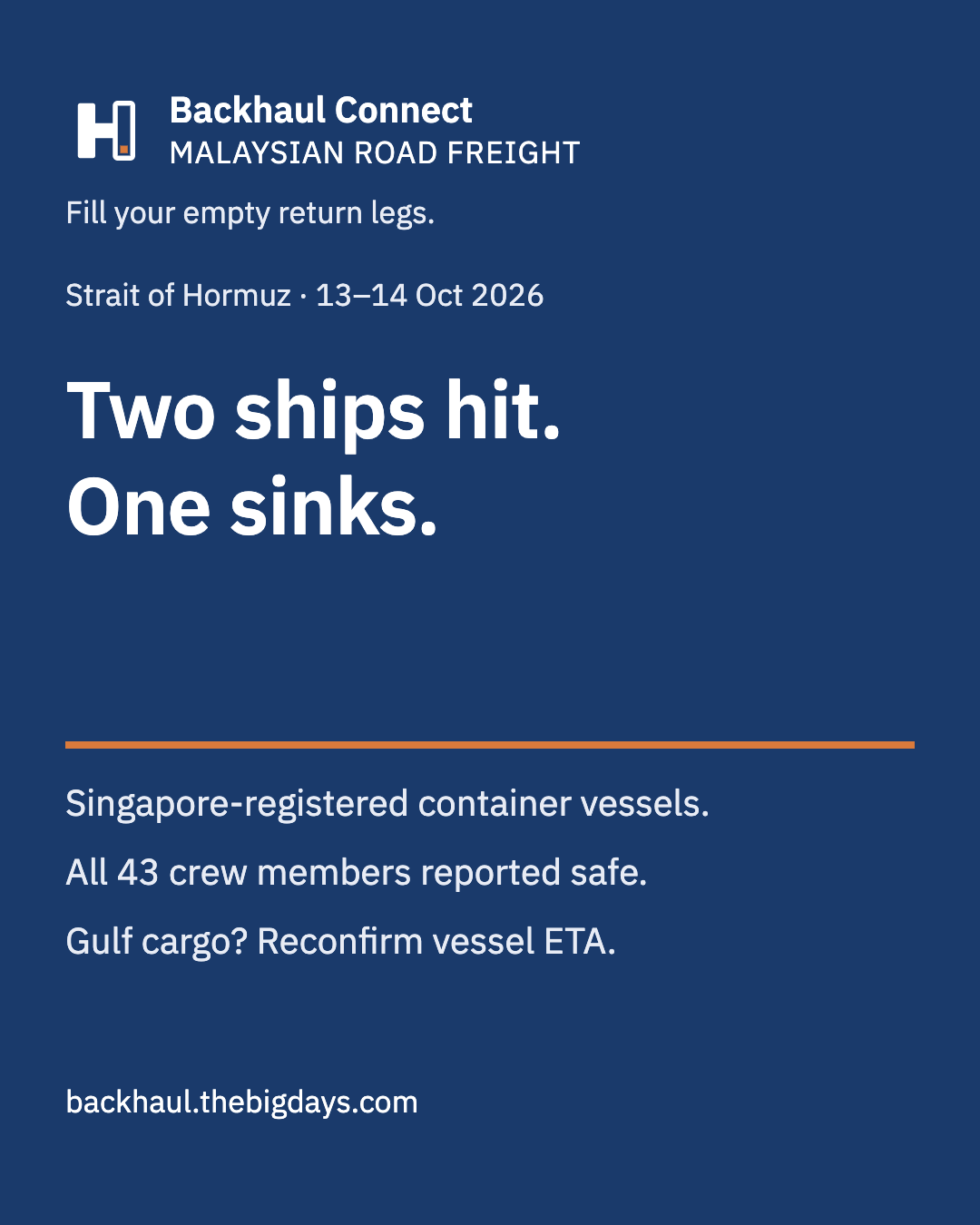
Malaysian businesses with Gulf-linked cargo should check vessel status, carrier advisories and revised delivery commitments before changing lorry collection or warehouse plans following two reported vessel strikes in the Strait of Hormuz.
What happened on 13–14 October?
Singapore’s Maritime and Port Authority (MPA) said Singapore-registered container vessels GFS PRIDE and GFS GISELLE were reportedly struck by unknown projectiles while transiting the Strait of Hormuz on 13 and 14 October 2026 respectively. The dates are Singapore Time, which is the same time zone as Malaysia.
GFS PRIDE sustained damage and an onboard fire, and subsequently sank. All 21 crew members were safely evacuated, with no injuries reported. GFS GISELLE sustained hull damage but reached a safe anchorage under its own propulsion. All 22 crew members were safe, with no injuries reported.
MPA said it was in contact with the vessels’ management company and monitoring the situation. The release did not establish the precise projectile type or who was responsible.
What does this mean for West Malaysian logistics?
The two reports do not establish a direct operational disruption at Pelabuhan Klang or to any specific Malaysia–Gulf service. Changes to vessel arrival dates could affect container collection, lorry allocation and warehouse receiving slots, but these are planning considerations, not confirmed consequences of these incidents.
Checks before changing the inland plan
- Ask the carrier or forwarder whether your cargo or booked service is affected.
- Check vessel movements, routing and carrier-specific contingency advice.
- Reconfirm vessel ETA and delivery commitments before agreeing revised dates.
- Coordinate any confirmed changes with the haulier and warehouse.
Do not assume a route closure, local freight-rate increase or missed delivery solely from these incidents. Confirm shipment-specific information before acting.